


Lincoln Tire Service in Orland Park, IL

It’s a cliché, but one based in truth: the tires are the only part of your vehicle that touches the road, making them vital to its performance and safety. That goes double during the harsh winter months across Chicago and Northwest Indiana, when a healthy, well-maintained tire can be the difference that helps avoid disaster. How do you know if you’re ready for the conditions? Read on to learn how to check your tires for safety and how to keep them in peak condition for as long as possible. Naturally, if you have any questions or need service, the experts at Joe Rizza Lincoln are ready to assist.
Signs You Need New Tires
Shallow Tread Depth
Many people know about the Penny Test, which involves placing a penny upside-down in the tire tread and coincidentally involves our namesake, Abraham Lincoln. If you can see the top of President Lincoln’s head, it means that your tread depth is dangerously shallow, under 2/32 of an inch. A lesser-known but similar trial, the Quarter Test, can confirm whether your tread is worn past 4/32 of an inch. Failing either test means that you urgently need new tires.
Sidewall Damage
If your tread depth remains healthy, check the sidewall for damage, including cracks, bubbles or blisters, cuts or punctures, and uneven wear patterns. While a shallow tread makes driving constantly treacherous, sidewall damage is more akin to a ticking time bomb, with the potential to cause a catastrophic incident at any moment. In particular, check your sidewalls carefully after hitting a pothole or striking a curb, as they may have sustained damage that might not be obvious at first glance.
Age
Even if your tires appear to be fine superficially, rubber degrades and loses its structural integrity over time. If your tires are at least six years old, they should be replaced.
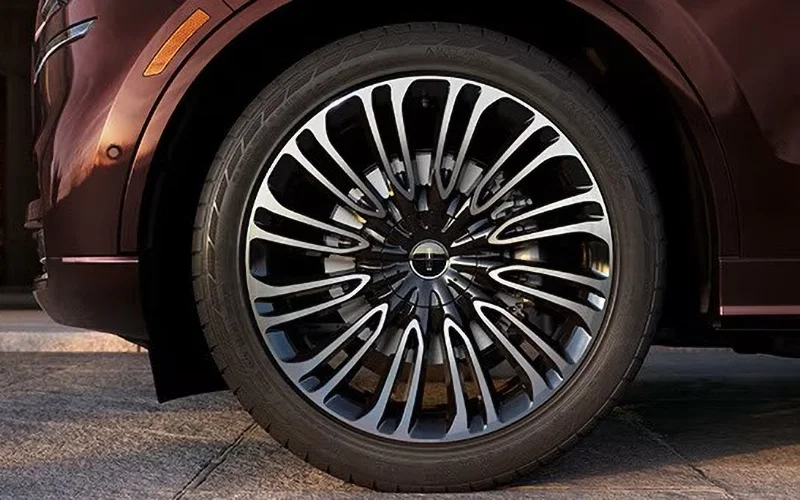
All-Season vs. Winter Tires
As the name implies, all-season tires are designed to handle capably all year long and across wet and dry conditions. They’re made with a hard rubber compound that maximizes tread life and reduces road noise inside the cabin.
Winter tires, however, are a worthy investment if you’re navigating Chicagoland’s brutal seasonal weather. They’re made with a softer rubber that stays pliable in colder temperatures in order to retain their grip, have deeper grooves to clear slush, and can dramatically reduce braking distances in slippery conditions. While a quality set of all-season tires are adequate to get the job done most of the time, winter tires are the most reliable way to travel across snow and ice.
Cold Weather and Tire Pressure
When that first cold snap of the season hits Orland Park, chances are pretty good that you’ll notice a new light on your display: from the Tire Pressure Monitoring System (TPMS). For every ten degrees the temperature drops, you’ll lose one or two PSI in each tire, so even if your inflation was fine the day before, it can still require correction.
It’s important to keep your tires inflated to their recommended pressures, as low-pressure tires carry significantly reduced traction, handling, and stopping power. Obviously, those issues are of heightened importance when the weather already has an impact on your tire performance.
Tire Rotation and Wheel Alignment
Two important steps you can take to ensure maximum performance out of your tires are regular rotations and wheel alignment adjustments. Both ensure that your tires are wearing evenly, as intended. That not only helps them last as long as possible, but also helps avoid major issues that can result from uneven wear.
There are different mileage guidelines for tire rotations, depending on the type of vehicle you drive. That said, even if you forget most of what you read here, remember that every 5,000 miles is a good rule of thumb covering most situations.
- Sedans and Coupes: Every 5,000 to 7,000 miles
- SUVs and Crossovers: Every 5,000 to 7,500 miles
- AWD and 4WD Vehicles: Every 3,000 to 5,000 miles
- Electric Vehicles (EVs): Every 5,000 to 6,000 miles
- Performance Cars: Every 3,000 to 5,000 miles
Your wheel alignment should be checked every 1-2 years, or every 10,000-30,000 miles — but sooner if you forcefully hit a pothole or a curb, or get into an accident.
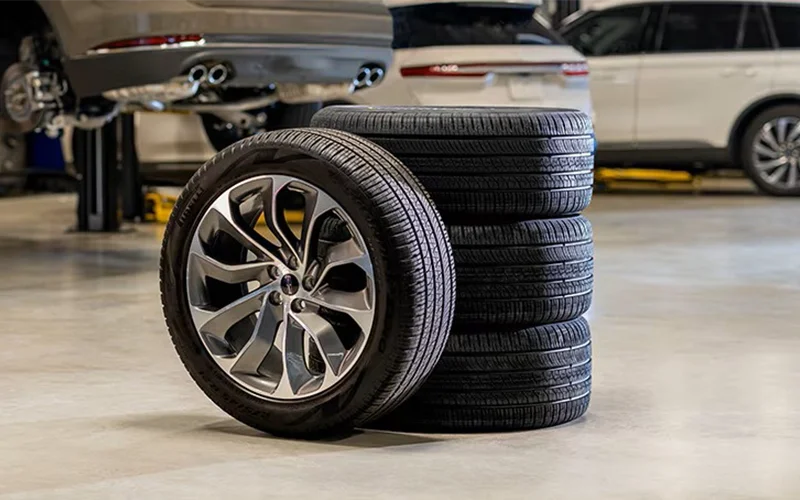
Why Have Your Tires Serviced at Joe Rizza Lincoln
Serving the south side of Chicago, including Orland Park, Tinley Park, and Bolingbrook, Joe Rizza Lincoln is the premier destination for Lincoln service. With the latest diagnostic equipment, specialized technology, and tools on site, handled by factory-trained experts, we have everything needed to take care of your vehicle both quickly and accurately. So, whether you’re just keeping up with your routine tire maintenance or need major repairs, you can count on us to keep you moving.
Frequently Asked Questions
How often should I rotate my Lincoln tires?
Though a precise number depends on your specific vehicle, every 5,000 miles is a good rule of thumb.
When should I switch to winter tires in Illinois?
You’ll want to make sure you have your winter tires on before you actually need them — specifically, when that first snowfall hits. In Chicago, that usually means October and November are the ideal months to make the switch.
Why does my tire pressure light come on when it’s cold?
Cold air compresses air molecules, meaning that the same air that filled out your tire when it was warm out is less able to do so in chillier temperatures. Generally speaking, you’ll lose 1-2 PSI of pressure for every ten degrees the temperature drops.
How do I know if I need an alignment?
Generally, you should get your wheels aligned every 1-2 years or every 10,000-30,000 miles, or after a significant incident. However, if you notice your vehicle pulling to the left or right, uneven tire wear, or a crooked steering wheel, bring it in immediately.
Hours & Directions
| Department | Number |
|---|---|
| Sales | 708-982-7231 |
| Service | 708-982-7234 |
| Parts | 708-982-7235 |
| Day | Open | Closed |
|---|---|---|
| Monday | 9:00AM | 9:00PM |
| Tuesday | 9:00AM | 9:00PM |
| Wednesday | 9:00AM | 9:00PM |
| Thursday | 9:00AM | 9:00PM |
| Friday | 9:00AM | 9:00PM |
| Saturday | 9:00AM | 7:00PM |
| Sunday | Closed | Closed |
| Day | Open | Closed |
|---|---|---|
| Monday | 7:00AM | 7:00PM |
| Tuesday | 7:00AM | 7:00PM |
| Wednesday | 7:00AM | 7:00PM |
| Thursday | 7:00AM | 7:00PM |
| Friday | 7:00AM | 5:00PM |
| Saturday | 7:00AM | 3:30PM |
| Sunday | Closed | Closed |
| Day | Open | Closed |
|---|---|---|
| Monday | 7:30AM | 6:00PM |
| Tuesday | 7:30AM | 6:00PM |
| Wednesday | 7:30AM | 6:00PM |
| Thursday | 7:30AM | 6:00PM |
| Friday | 7:30AM | 5:30PM |
| Saturday | 7:30AM | 2:30PM |
| Sunday | Closed | Closed |